
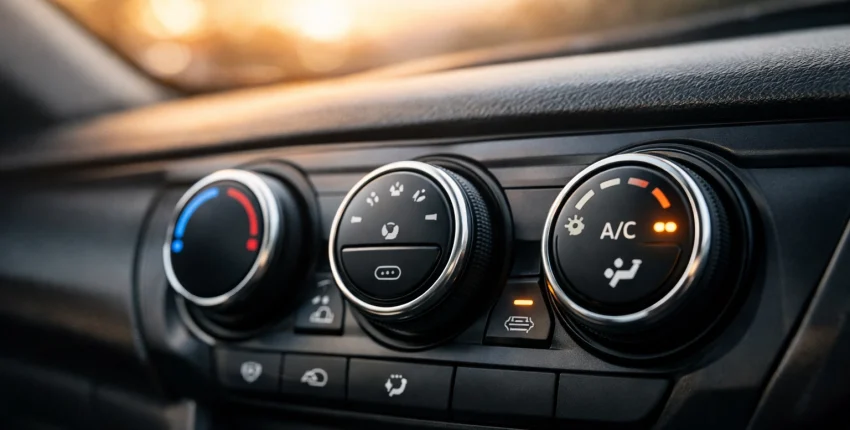
When summer hits Boise and Garden City, your car’s AC stops being “nice to have” and becomes something you count on. So if you start the car, turn the AC to max, and the vents blow warm air, it’s not just annoying—it’s a sign the system isn’t removing heat like it should.
It’s natural to think, “I just need a recharge.” Sometimes that’s true. But warm air can also happen when the system can’t compress refrigerant, can’t get rid of heat, can’t move enough airflow across the right parts, or is being told to shut down by an electrical/sensor issue.
Below are seven common causes we see for warm AC—and what each one actually means—so you can avoid guessing (and avoid paying twice).
1. The Compressor Isn’t Pumping Refrigerant
The compressor pressurizes and moves refrigerant through the AC system. If it can’t pump, the refrigerant can’t circulate—and the system can’t pull heat out of the cabin air.
Common signs include the AC working intermittently, unusual noises when the AC is turned on, or the compressor clutch not engaging. In many vehicles, the computer may also disable the compressor if it sees unsafe pressure readings.
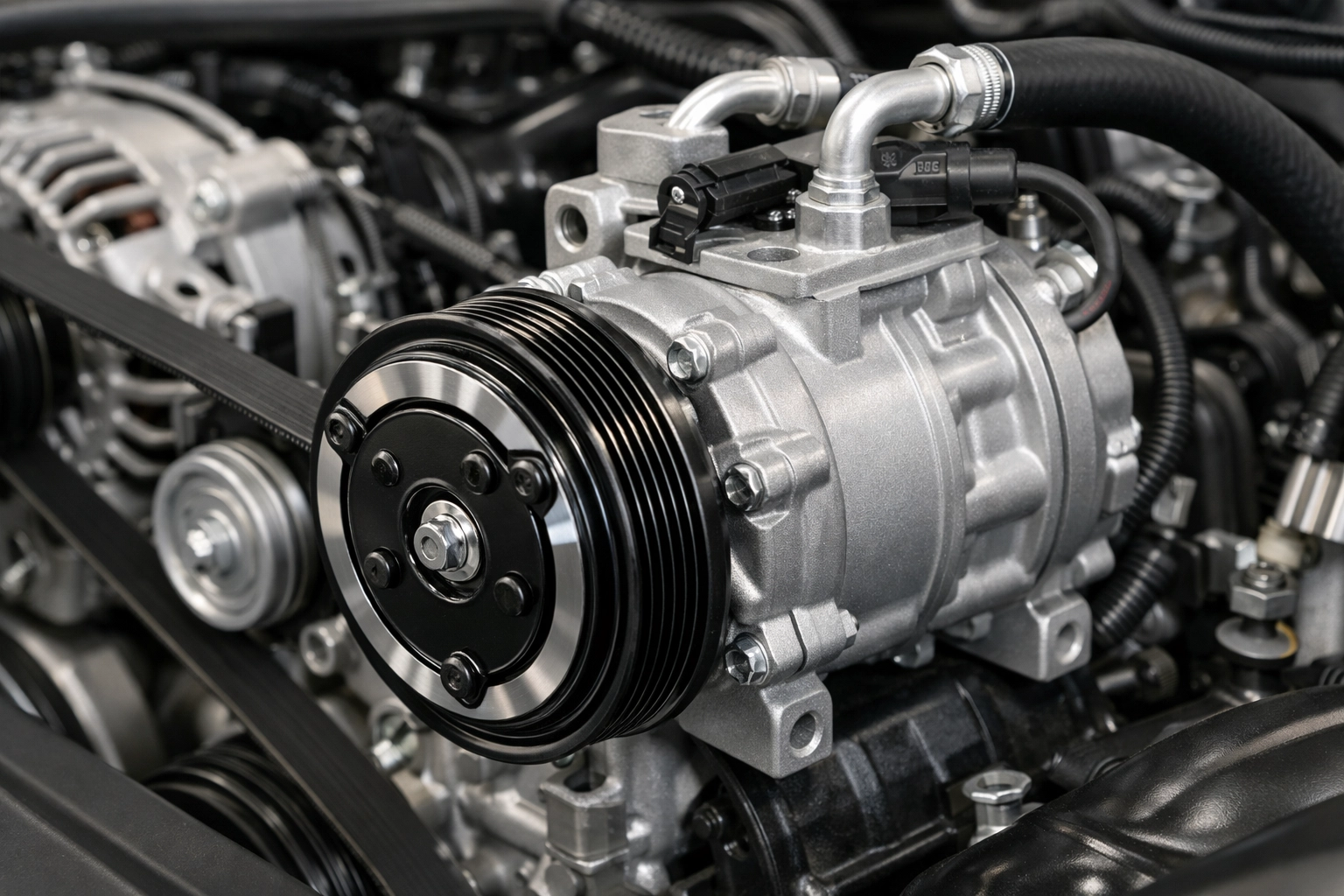
Compressor problems typically aren’t solved by “topping off” refrigerant. The correct fix depends on whether the issue is the clutch, internal compressor wear, contamination in the system, or a control/pressure problem preventing engagement.
2. The Condenser Can’t Dump Heat (Blocked or Poor Airflow)
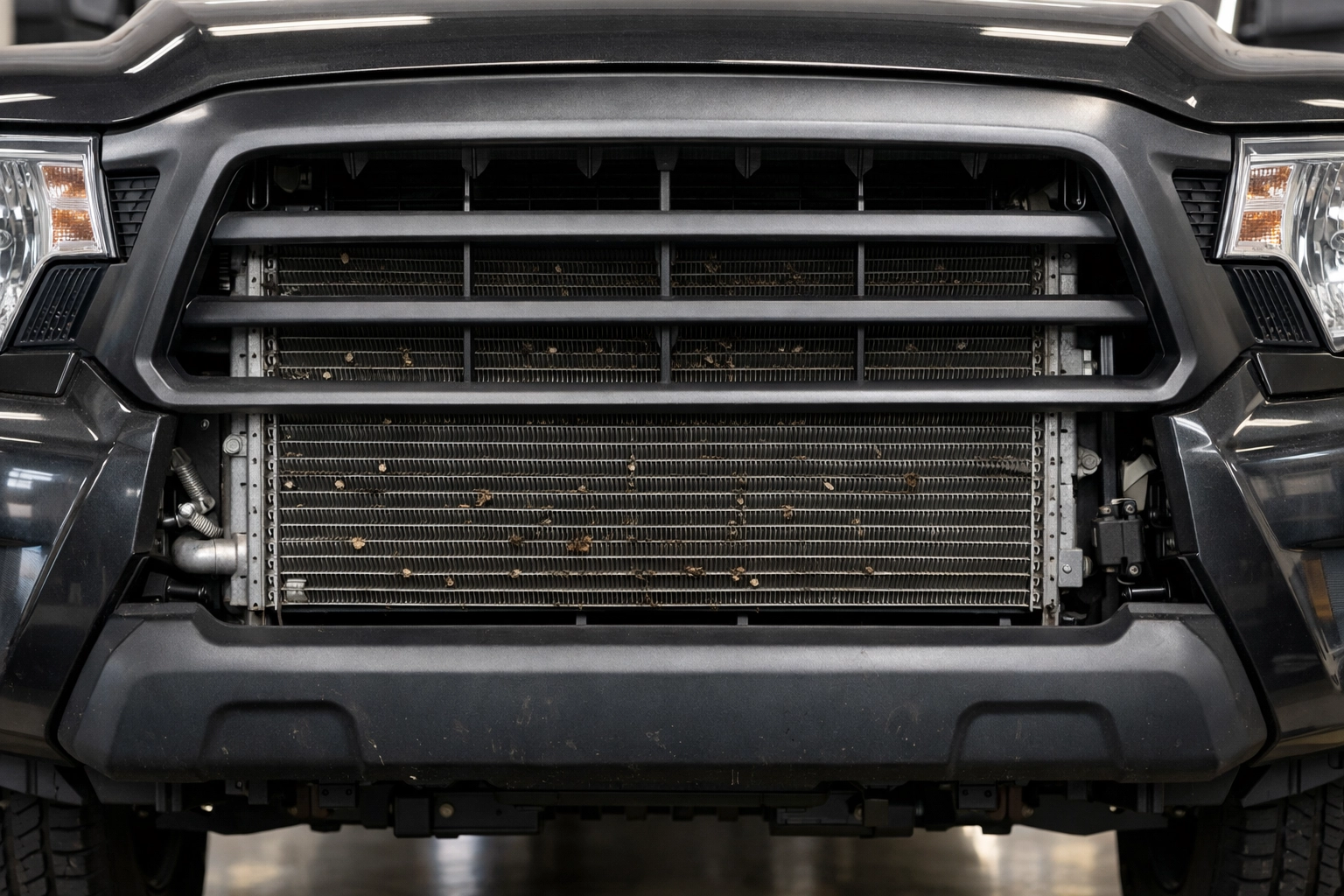
The condenser sits in front of the radiator. Its job is to release heat from the refrigerant to the outside air. If the condenser can’t shed heat, refrigerant stays too warm—and the air coming out of your vents won’t feel cold.
This often happens when the condenser fins are packed with bugs/debris, fins are bent, or the cooling fans aren’t moving enough air at idle. A classic clue: the AC feels cooler at highway speeds but warms up in traffic.
3. The Blend Door Is Stuck on “Heat” (Air-Mixing Problem)
Sometimes the AC system is actually making cold air—but the HVAC doors inside the dash are mixing in heat. The blend door controls how much air passes across the cold evaporator (AC) versus the hot heater core.
If the blend door is stuck, broken, or the actuator fails, you can get warm air even while the compressor is running. Common clues are clicking/tapping in the dash, temperature that won’t change when you turn the knob, or different temperatures from different vents.
4. An Electrical or Sensor Issue Is Keeping the AC Off
Even with good mechanical parts, the AC won’t cool if the compressor isn’t being commanded on. A blown fuse, bad relay, wiring issue, pressure sensor fault, or a control head/module problem can stop compressor operation or cooling fan operation.
Electrical problems often look like “sometimes it works, sometimes it doesn’t.” Many vehicles will also shut the compressor off on purpose if pressures/temperatures read unsafe—so scanning for codes and checking commanded operation matters.
5. The Expansion Valve/Orifice Tube Is Restricted (Wrong Refrigerant Flow)
Your AC needs the right amount of refrigerant entering the evaporator (the part in the dash that gets cold). The expansion valve—or an orifice tube, depending on the vehicle—controls that flow.
If it sticks or gets restricted by debris, the evaporator may not get the right pressure/temperature drop to cool properly. Symptoms can include weak cooling, cooling that comes and goes, or icing on AC lines. Restrictions also point to contamination in the system, which is why proper diagnosis matters before parts get replaced.
6. The Cabin Air Filter Is Plugged (Cold Air Can’t Reach You)
If the cabin air filter is clogged, airflow through the vents drops. The AC may still be cooling, but not enough air is moving across the evaporator and into the cabin—so it feels like the AC isn’t working.
This usually shows up as low airflow on all fan speeds, musty smells, or the system struggling more in dusty/pollen-heavy months around Garden City and Boise.
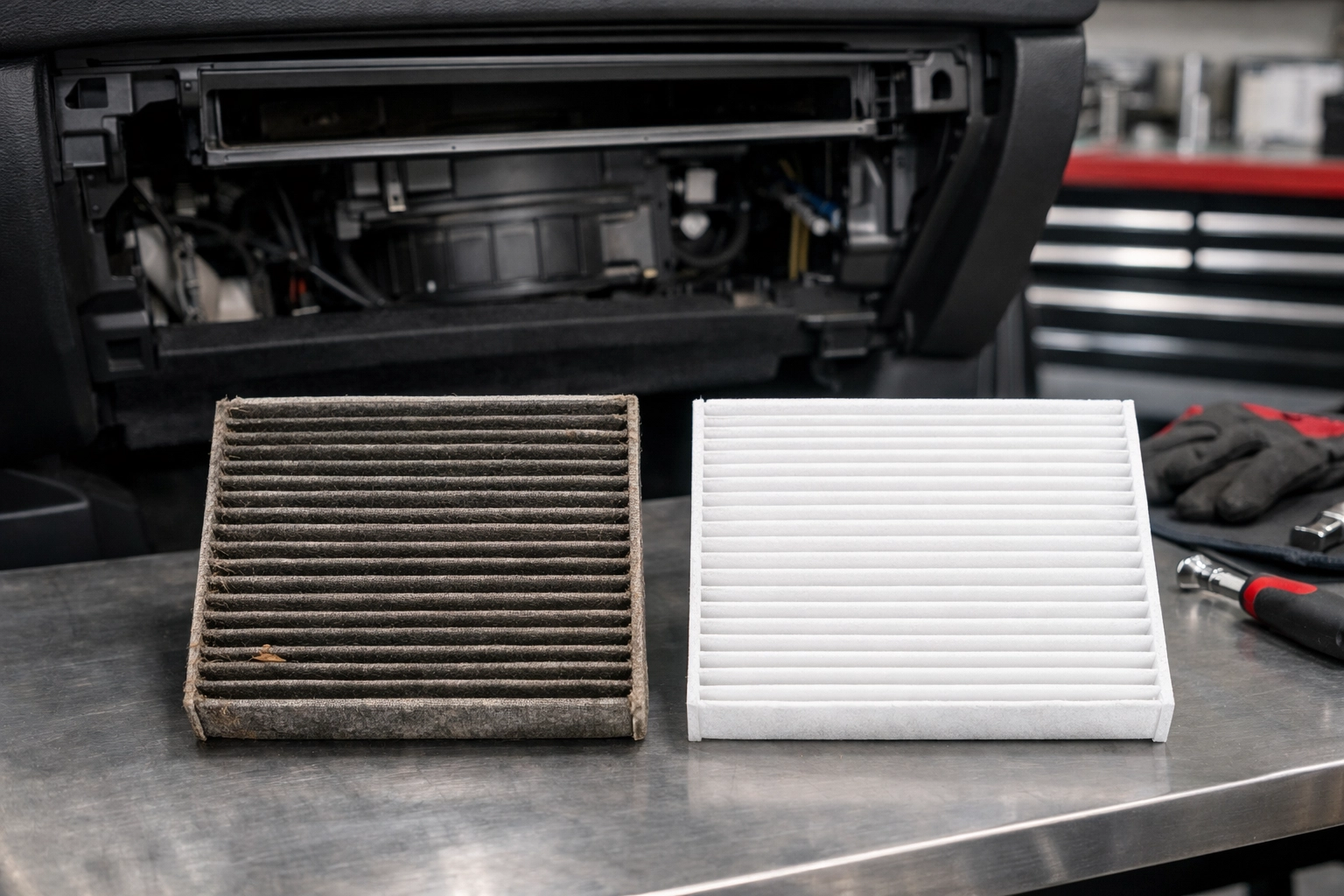
This is often the simplest fix: replace the cabin filter, then recheck airflow and vent temperature.
7. Low Refrigerant (Usually Caused by a Leak)
Low refrigerant is a common reason for warm AC—but refrigerant doesn’t get “used up.” If the level is low, the system is leaking somewhere (an O-ring, hose, condenser, evaporator, or a service port are common spots). When refrigerant drops too far, pressures fall out of range and the system can’t absorb heat effectively; many vehicles will also shut the compressor off to prevent damage.
Adding refrigerant without fixing the leak is temporary at best. The right approach is to find the leak (often with dye, an electronic detector, or pressure/vacuum testing), repair it, then recharge the system to the exact specification for your vehicle.
Why Professional AC Repair Matters
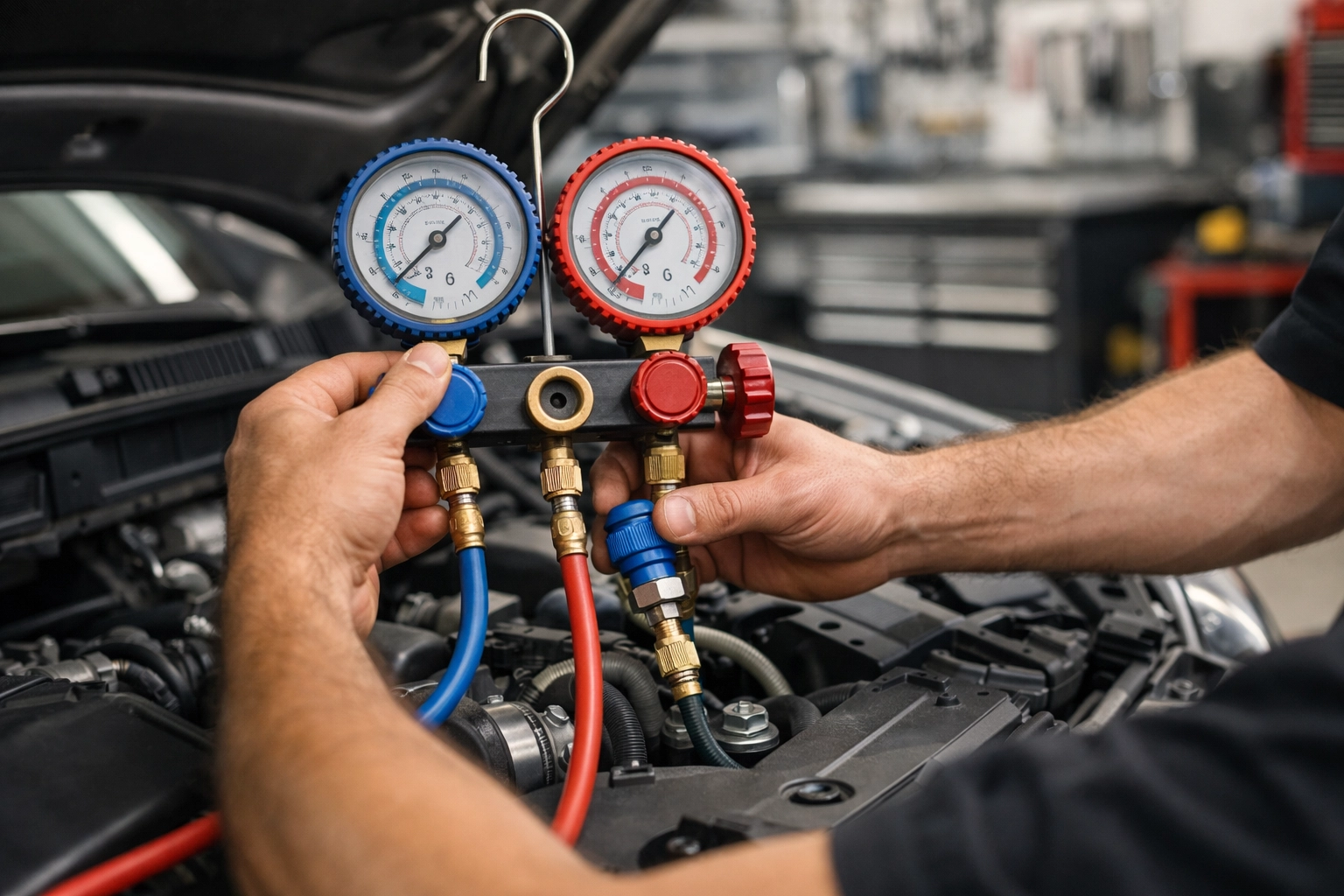
Car AC diagnosis is more than adding refrigerant. The system operates under high pressure, relies on correct refrigerant charge by weight, and often involves electrical controls that can shut cooling down even when parts are fine.
At Wrench & Ratchet Auto Care, we focus on confirming the actual cause—pressure readings, vent temps, fan operation, leak checks, and control diagnostics—so you’re not paying for guesses. Once we know why it’s blowing warm, we can recommend the repair that fixes it the first time.
If your AC is blowing warm in Boise or Garden City, reach out to us. We’ll get you back to cold air without the runaround.