
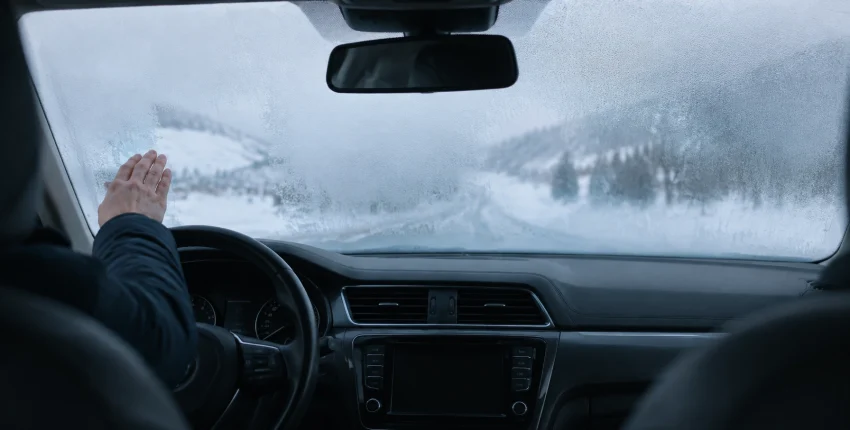
You’re ready to leave, but the windshield is cloudy from the inside, and turning up the heat doesn’t seem to help. When temperatures drop below freezing, that familiar winter frustration can take longer than expected to clear.
The cause is usually moisture trapped in the cabin meeting cold glass. But if the fog keeps returning, or leaves a greasy film behind, it may be more than ordinary condensation. Here’s what’s going on and what to do about it.
Why windows fog up inside when it’s cold
Your breath adds moisture to the air inside the vehicle. So do damp jackets, wet boots, and snow melting on floor mats. When that warm, moist cabin air touches a cold windshield or side window, some of its water vapor condenses into tiny droplets on the glass. That’s the fog you see.
Below-freezing mornings make the problem more stubborn because the glass starts out extremely cold. Even after the cabin begins to warm up, the windshield can remain cold enough for moisture to condense on it. The result: you’re blowing warm air, but the view stays hazy.
The moisture has to go somewhere. Clearing the glass means reducing the dampness in the cabin air and warming the windshield, not simply turning the temperature dial higher.
The winter setting mistake that keeps the fog around
Recirculation is useful in summer, when you want to cool cabin air that’s already been chilled. In winter, leaving it on can work against you.
With recirculation selected, the system keeps moving the same cabin air around. That air picks up moisture from everyone’s breath and wet gear, then carries it back to the cold glass. More recirculating can mean more humidity and fog.
For winter defogging, switch to fresh air so the system draws in outside air instead. Cold outside air may feel unpromising, but when it’s warmed inside the car, it can help lower cabin humidity. Check that the recirculation indicator is off; some vehicles also change modes automatically when you select defrost.
Why the defrost setting can work better than heat alone
A/C isn’t only for cooling. In many vehicles, selecting front defrost runs the A/C compressor when conditions allow, even with the heat turned up. The A/C system removes moisture from the air; then the heater warms that drier air and directs it toward the windshield.
That combination, dry air plus warmth, usually clears interior fog faster than simply cranking the heat. Some vehicles manage the compressor automatically, and its operation may be limited in very cold temperatures. If your controls let you select A/C, leave it on while defrosting unless your owner’s manual says otherwise.

Where cabin moisture comes from
A little condensation after several passengers get in from the cold is ordinary. Moisture that builds up often, or takes a long time to clear, may have more than one source.
- Wet boots and snow-covered floor mats: Snow melts, leaving damp carpets and mats to release moisture back into the cabin.
- Jackets, bags, and other wet gear: Damp fabric slowly adds moisture to the air, even after you’ve parked.
- A clogged or damp cabin air filter: A restricted filter can reduce airflow from the vents. If the filter is wet, it may also contribute to dampness.
- Water getting into the vehicle: A leaking sunroof drain or another point of water intrusion can leave carpets, trim, or the headliner damp.
- A cooling-system leak: A heater-core leak can put coolant vapor into the cabin’s airflow. A sweet smell and a greasy windshield film that returns are warning signs, not routine fog.
A windshield film that seems oily or smears rather than clearing is different from a layer of condensation. A heater-core problem is one possible cause, especially when the film comes with a sweet odor, damp passenger-side carpet, or unexplained coolant loss. For more context on warning signs, read our article on coolant leaks and why they need prompt attention.
A practical routine for clearing fog
When you can’t see clearly, don’t set off and hope the windshield clears on its own. Park safely and give the glass time to clear.
- Select front defrost and direct airflow toward the windshield.
- Choose fresh air, not recirculation.
- Turn on A/C with the heat, if your vehicle allows it. Defrost mode may manage this automatically.
- Use the rear defroster and open the side-window vents to help clear the other glass.
- If it’s safe and practical, crack a window briefly during the first minute. Letting some humid cabin air out can help.
- Clear snow from your shoes and floor mats before getting in. Dry removable mats when you can.
- Keep damp gear from lingering in the cabin. A moisture absorber designed for vehicles may help, but it won’t fix a leak or replace a needed repair.
- Check the cabin air filter if airflow is weak or the glass is slow to clear. Replace it if it’s wet or due for service.
Keep using the defroster until you have a clear view through the windshield and windows. If you’re unsure how your climate controls work, consult your owner’s manual.
When persistent fog deserves an inspection
If the windshield keeps fogging even after you’ve switched to fresh air and used defrost, it’s worth looking for an underlying issue. Arrange an inspection if you notice any of the following:
- Fog returns repeatedly, especially with a sweet smell inside the cabin.
- The inside of the windshield has a greasy film that comes back after cleaning.
- The passenger-side carpet feels damp or you find unexplained wet spots.
- You hear water sloshing inside a door or another part of the vehicle.
- You see water stains or dampness on the headliner.
These symptoms can point to a heater-core concern or water getting into the cabin. The right diagnosis depends on what’s causing the moisture; simply wiping the glass or changing climate settings won’t resolve an active leak.
Your vehicle’s airflow, cabin air filter, heater, and A/C all play a part in clearing the glass. If one of those isn’t working properly, the others may not be enough to keep your view clear. Wrench & Ratchet’s heating and cooling system service can help identify HVAC airflow concerns, filter issues, or a problem with the A/C system’s dehumidifying role.
Stay clear of the fog this winter
Cold glass, damp cabin air, and recirculation can turn a routine winter drive into a visibility problem. Use fresh air and full defrost, keep wet gear under control, and don’t ignore a sweet smell or a film that returns.
If your windows keep fogging or you’ve noticed signs of moisture inside the vehicle, contact Wrench & Ratchet Auto Care for an inspection. We’re at 202 W 41st St, Garden City, ID, and can be reached at 208-345-0011. We serve drivers in Garden City, Boise, and surrounding Idaho communities.