
A clunk over a rough patch of pavement can make you wonder if something has come loose underneath your car. In November, when cold snaps and uneven roads become more familiar around Garden City and Boise, suspension noise can stand out even more.
Some brief squeaks on a cold morning may ease as the vehicle warms up. That alone doesn’t confirm a failed part. But a noise that grows louder, changes, or comes with a change in handling deserves a closer look. The sound is useful information, not a diagnosis.
Why rough roads and cold weather bring out suspension noise
Freeze-thaw cycles can lift and crack pavement. Water in the ground freezes and expands, sometimes pushing sections of the road upward. As temperatures change, frost heaves and potholes can form, giving tires and suspension components a more abrupt ride.
Cold also affects how a vehicle feels and sounds. Rubber bushings can become less flexible, while tires harden at low temperatures. The oil inside shocks and struts can respond differently when cold, so the suspension may feel firmer over bumps until it warms. Existing wear or looseness that was hard to notice in milder weather can become more obvious.
That doesn’t mean every cold-weather squeak signals a repair. A short-lived creak that fades during a drive may simply reflect cold components. A repeated clunk, a worsening rattle, or a new pull or vibration is a different story.
What different noises may point to
The spot where a sound occurs and what the vehicle is doing can help narrow down possible causes. Several parts can make similar noises, though, so use these examples as clues, not a parts diagnosis.
Dull clunk or knock over bumps
A dull knock each time a wheel crosses a bump can come from worn sway bar links or bushings, control arm bushings, or strut mounts. If the sound happens over smaller bumps as well as larger ones, note that detail when describing the issue.
Metallic rattle on uneven pavement
A metallic rattle may come from worn sway bar end links, loose brake hardware, or a loose heat shield. Because these parts are in different areas of the vehicle, the sound’s location and whether it appears during braking can help a technician investigate.
Creak or groan over a speed bump
Dry or worn bushings may creak or groan as the suspension moves, particularly in cold weather when rubber is less flexible. If the sound continues after the vehicle has warmed up or becomes more frequent, arrange an inspection.

Thud or bottoming-out feel
A heavy thud or a sensation that the vehicle bottoms out may be related to worn shocks or struts. Heavy cargo can also leave less room for the suspension to absorb a large bump. If the thud repeats under ordinary driving conditions, don’t assume it’s just the road.
Knocking while turning
A clicking or knocking sound that’s most noticeable during a turn may involve a constant velocity (CV) joint. A wheel bearing can also make noise, though it often produces a humming or growling sound that changes with vehicle speed or turns. Both CV joints and wheel bearings are important parts to have checked if a noise persists.
Clunk when setting off from a stop
A clunk as you accelerate from a stop can come from a worn CV joint, an engine or transmission mount, or loose suspension hardware. Since several systems can create similar symptoms, a technician may need to reproduce the sound and inspect the vehicle before identifying the cause.
Shimmy or vibration at speed
Vibration or a shimmy can be related to wheel balance, tire condition, or worn suspension components. If it appears after hitting a pothole, changes as your speed changes, or comes with uneven tire wear, mention those details during an inspection.
When a cold-weather squeak is different from a warning sign
A brief squeak or creak that happens on a cold morning and softens as the car warms up doesn’t automatically mean a component is failing. Changes in temperature can affect how rubber and other materials move and sound.
Pay closer attention if the noise gets louder, happens more often, changes pitch, or appears in new situations. A sound accompanied by a pull to one side, vague steering, uneven tire wear, or reduced stability while braking deserves attention. These handling changes can matter more than the noise itself.
A single sound can have several possible causes, and not every rattle comes from the suspension. A loose heat shield, brake hardware, or packed road debris may sound similar to a worn suspension part. That’s why replacing a component based on sound alone can miss the real source.
What a proper inspection checks
A useful inspection combines a road test with a hands-on check of the vehicle. During a road test, a technician can listen for the noise and note whether it occurs over bumps, while turning, during acceleration, or when braking.
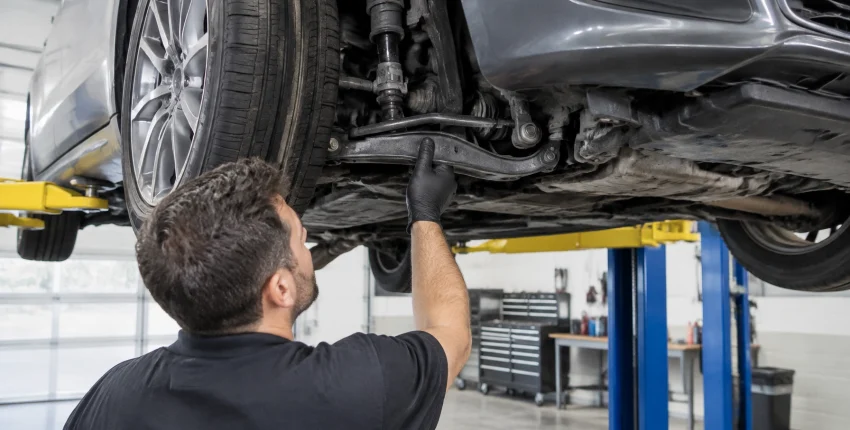
On a lift, the inspection can include ball joints, tie rod ends, control arm bushings, sway bar links and bushings, and strut mounts. A technician can also look for leaks on shock bodies and check tire condition and wheel bearings for play. The findings help distinguish worn or loose components from other possible sources of noise.
It’s also important to discuss how the vehicle feels. Uneven tire wear, pulling, vague steering, or a change in braking stability can help indicate whether there’s more going on than a cold-weather sound. If you’re noticing a steering wheel shake when braking, that symptom may need a separate brake-system assessment; this article on suspension service after hitting a pothole also explains why it’s worth checking for damage after a hard impact.
At Wrench & Ratchet Auto Care, Suspension Services include inspecting and repairing suspension components to address handling issues, uneven tire wear, and ride comfort problems. The goal is to identify the cause before recommending a repair, not guess based on one noise.
A few winter habits that can help
You can’t control the pavement, but a few practical habits may reduce extra wear and make it easier to catch problems early:
- Rinse the underbody to clear away road salt and grit.
- Slow down when conditions allow and avoid driving straight into potholes.
- Pay attention to when a noise happens and whether it changes as the car warms up.
- Have persistent or worsening suspension noise checked before it grows into a larger repair.
Don’t swerve suddenly to avoid a pothole if doing so would put you or others at risk. When a bump can’t be avoided, reducing speed safely may help soften the impact.
A clunk is worth understanding
Cold mornings and frost-heaved pavement can make a vehicle noisier, and an occasional squeak that fades with warmth doesn’t automatically mean a part has failed. But repeated clunks, worsening rattles, or changes in steering, tire wear, or braking stability are good reasons to arrange an inspection.
If you’re hearing suspension noise around Garden City or Boise, contact Wrench & Ratchet Auto Care to discuss what you’re noticing. We’re at 202 W 41st St, Garden City, Idaho. Call 208-345-0011 or contact us to schedule an inspection.