
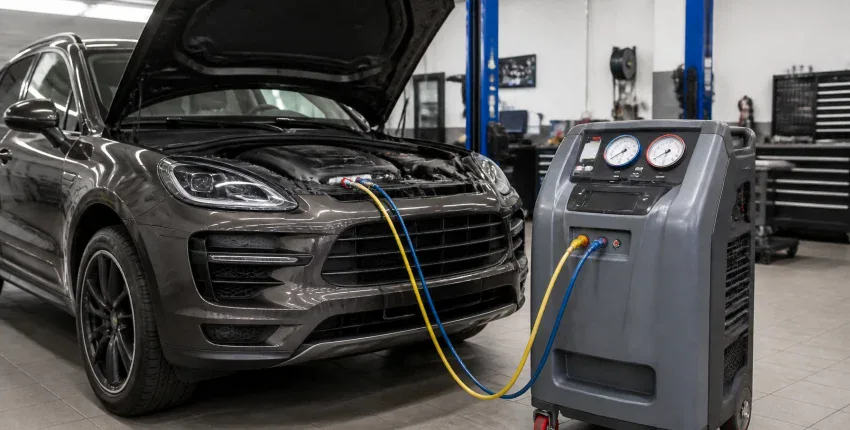
If you’ve lived through a summer in the Treasure Valley, you know that a functional air conditioning system isn’t just a luxury: it’s a survival tool. Whether you’re stuck in traffic on Chinden Boulevard or heading out for a weekend trip toward the Sawtooths, that blast of cold air is what makes the drive bearable.
However, if you’ve recently bought a newer vehicle or noticed your modern car isn’t quite as chilly as your old one, you might have heard your mechanic mention something called “R-1234yf.” For most drivers, it sounds like a cryptic code. In reality, it represents one of the biggest shifts in automotive technology in the last thirty years. This new refrigerant is changing how we approach AC repair and what you can expect the next time you bring your car into the shop.
In this guide, we’re going to break down what this technology is, why the industry shifted, and what it actually means for your wallet and your comfort during the Idaho summer.
The Big Switch: From R-134a to R-1234yf
For decades, the standard refrigerant used in almost every car on the road was R-134a. It was effective, relatively inexpensive, and every shop in the country was equipped to handle it. But around 2014, things started to change. Automakers began transitioning to a new type of gas: R-1234yf.
By 2021, almost every new vehicle sold in the United States: from your standard Toyota Camry to luxury models like Bentley and Audi: was built with this new system. If your car was manufactured in the last five to eight years, there is a very high probability that it uses this new refrigerant.
The primary reason for this change wasn’t actually performance; it was the environment. R-134a has a high “Global Warming Potential” (GWP). If it leaks out of your car, it stays in the atmosphere for a long time. R-1234yf, on the other hand, breaks down in days and has a GWP that is roughly 99% lower. While that’s great for the planet, it has fundamentally changed the landscape of automotive maintenance.
Why Your Next AC Repair Might Look (and Cost) Different
If you’re used to the pricing of a standard AC recharge from ten years ago, the first thing you’ll notice with R-1234yf is the price tag. This isn’t because your local shop is trying to upcharge you; it’s because the material and the equipment required are significantly more expensive.
1. The Cost of the Gas
R-1234yf is much more expensive to produce than the old R-134a. While prices have stabilized somewhat since it was first introduced, a pound of the new stuff still costs several times more than the old version. Because of this, even a minor leak and a simple “recharge” can cost more than it used to.
2. Specialized Equipment
You can’t just use the same old manifold gauges and vacuum pumps on these new systems. R-1234yf requires highly specialized, computer-controlled recovery and recharge machines. These machines are designed to ensure that the gas is pure and that not a single ounce is wasted or leaked into the atmosphere during the service. Because these machines represent a significant investment for a shop, it’s important to find a facility that has actually invested in the right tools for modern vehicles.
3. Safety Precautions
Unlike R-134a, the new refrigerant is classified as “mildly flammable.” While it is perfectly safe inside your car’s sealed system, it requires different handling procedures in a shop environment. Technicians need specific training to work on these systems safely, ensuring that everything is sealed and pressurized correctly to prevent any hazards.

Does the New Tech Keep You Just as Cold?
A common question we get from drivers in Garden City and Boise is whether this “eco-friendly” gas actually works as well as the old stuff. There’s a bit of a myth that newer cars don’t get as cold.
Technically, R-1234yf has a slightly lower cooling capacity than R-134a in a side-by-side lab test. However, automotive engineers have accounted for this by designing more efficient heat exchangers and compressors. In a modern car like a BMW or a high-end Audi, the climate control system is so advanced that you likely won’t notice a difference in cabin temperature.
The real difference is how the system handles the heat. Modern AC systems are more integrated with the car’s computer. They can adjust the compressor load based on how hard you’re accelerating or the outside temperature, helping to maintain comfort while saving fuel.
Signs Your AC System Needs Professional Attention
Regardless of which refrigerant your car uses, the symptoms of a failing system are usually the same. If you notice any of the following, it’s probably time to look for professional AC repair in Garden City:
- The Air Isn’t Cold Enough: This is the most obvious sign. If your vents are blowing “cool” but not “cold” air, you likely have a small leak or a failing component.
- Strange Noises: If you hear a squealing or grinding sound when you turn on the AC, it could be a sign that the compressor clutch is failing.
- Musty Smells: This often points to mold or mildew buildup in the evaporator core or a clogged cabin air filter.
- Intermittent Cooling: If the air stays cold for a while and then turns warm, it could be an electrical issue or a freezing expansion valve.
Because modern systems are so sensitive to the exact amount of refrigerant: sometimes measured down to the gram: trying to “top it off” with a DIY kit from a big-box store is often a recipe for disaster. Overfilling a system can cause just as much damage as a leak, potentially blowing out seals or damaging the compressor.
Why Quality Workmanship Matters for Modern AC
At Wrench & Ratchet Auto Care, we’ve seen how quickly a simple AC issue can turn into a major headache if it’s not handled correctly. This is especially true for luxury brands and late-model vehicles that rely on complex electronics to manage cabin temperature.
As proud TechNet Professional Automotive Service members, we make sure our technicians stay updated on these evolving technologies. Whether your vehicle is a classic that still uses R-134a or a brand-new Maserati that requires the latest R-1234yf service, we have the specialized equipment and the expertise to handle it.
We believe in honest, straightforward pricing. When you bring your car in, we don’t just “add gas” and send you on your way. We perform a thorough diagnostic to find the root of the problem. If there’s a leak, we’ll find it and explain your options before we do any work. Plus, with our flexible financing through Synchrony Car Care, we can help make sure you don’t have to choose between your budget and your comfort.
Thinking of Buying a Used Car? Check the AC First
If you are in the market for a used vehicle in the Boise area, it is worth checking which refrigerant the car uses. You can usually find this on a sticker under the hood. Knowing whether a car uses R-134a or R-1234yf can help you anticipate future maintenance costs.
We always recommend a pre-purchase inspection before you sign the paperwork. Part of our inspection process includes checking the AC system’s performance and looking for signs of past leaks or “quick-fix” repairs that might cause trouble down the road.
Conclusion
The shift to R-1234yf is a great step forward for the environment, but it has certainly added a layer of complexity to automotive care. Understanding that your modern car requires specialized equipment and a more expensive refrigerant can help you plan for your vehicle’s long-term health.
Don’t spend another day sweating through your commute because your AC isn’t performing the way it should. Whether you need a simple diagnostic or a complex repair on a luxury cooling system, our team is here to help. At Wrench & Ratchet Auto Care, we pride ourselves on a clean, professional environment and quality workmanship that gets you back on the road fast.
Ready to get your car’s climate control back in peak condition? Contact us today to schedule your AC service and stay cool all summer long!